
Few phrases in the English language can make a person tense up quite like “you need a root canal.” For decades, this procedure has been the subject of dental horror stories, often associated with extreme pain. If you have been told you need one, your first thought is probably about how much it will hurt. You might even be searching online for answers to the question, “are root canals painful?” and feeling a wave of anxiety.
The good news is that the reputation of root canals is largely a thing of the past. Thanks to modern techniques, effective anesthesia, and the care of a gentle St. George dentist, the experience is far more comfortable than most people imagine. This article will answer your common questions and ease your fears. At Utah Dental Center, we specialize in providing gentle, effective root canal therapy to help our patients relieve pain and save their natural teeth.
Are Root Canals Painful? St. George Dentist Explains
Let’s address the main question head-on. When you ask, “are root canals painful,” the honest answer is that the procedure itself should not be. The intense pain people associate with root canals almost always comes from before the treatment itself. A severe toothache caused by an abscess or nerve damage is one of the most painful experiences a person can have. A root canal is the solution to that pain.
With today’s highly effective local anesthetics, the tooth and surrounding area can be completely numbed. Most patients report feeling some pressure during the procedure, but not the sharp pain they were experiencing beforehand. The myth that root canals are the most painful dental procedure is simply outdated. In reality, a root canal is a pain-relieving procedure. Its sole purpose is to remove the source of the infection and relieve the painpain, and, most importantly, saves your natural tooth from extraction.
Why You Might Need a Root Canal
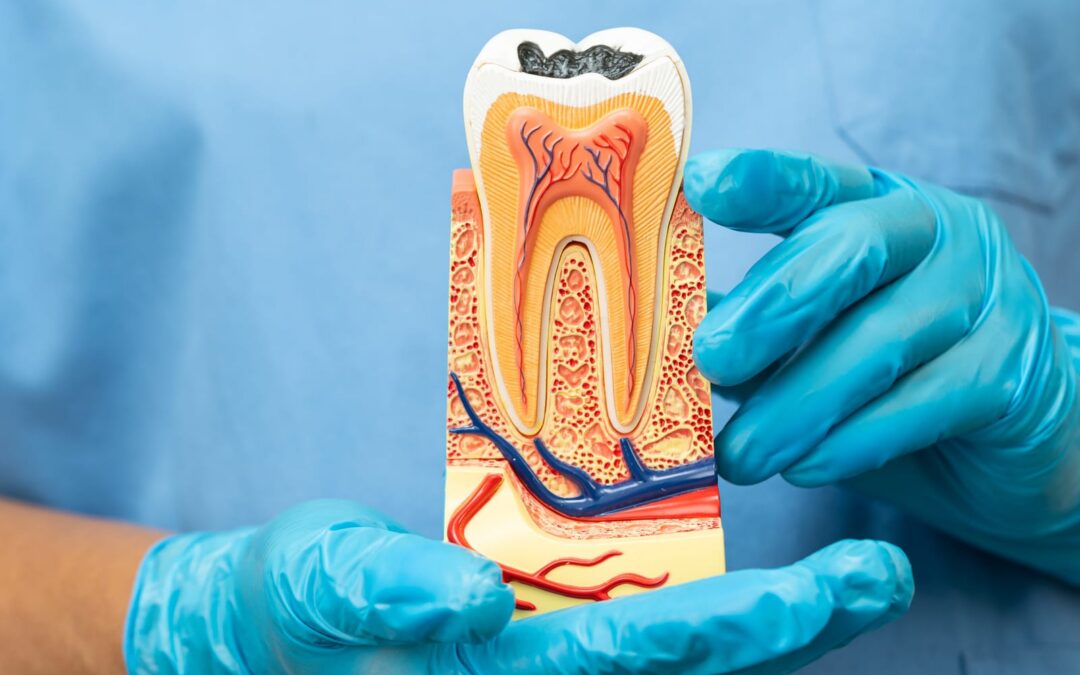
A root canal is a treatment used to repair and save a tooth that is badly decayed or has become infected. The procedure is necessary when the soft tissue inside your tooth, called the pulp, becomes inflamed or infected. This can happen for several reasons:
- Deep Decay: An untreated cavity can spread deep into the tooth, eventually reaching the pulp.
- Infection or Abscess: Bacteria can enter the pulp, leading to a painful infection or a pus-filled pocket at the root of the tooth called an abscess.
- Trauma or Cracked Tooth: A chip or crack in a tooth can create a pathway for bacteria to infect the pulp.
During a root canal treatment, the infected pulp is removed, the inside of the tooth is cleaned and disinfected, and then it is filled and sealed. This process eliminates the infection and relieves pain, saving the natural tooth from extraction. To ensure your comfort, a strong local anesthetic is used to numb the area completely.
Step by Step: What Happens During a Root Canal?
Knowing what to expect can significantly reduce anxiety. A root canal is a precise, multi-step process designed to be as comfortable as possible. Here is a simple breakdown of what happens:
- Exam and X-rays: The first step is to confirm that a root canal is needed. Your dentist will examine the tooth and take X-rays to see the shape of the root canals and determine the extent of the infection.
- Local Anesthesia: The dentist will apply a strong local anesthetic to numb the tooth and surrounding gum tissue. They will not begin the procedure until you are fully numb and comfortable.
- Cleaning the Canals: A small opening is made in the crown of the tooth. Using very small, precise instruments, the dentist will gently remove the infected or damaged nerve tissue from inside the tooth.
- Disinfection and Shaping: Once the pulp is removed, the inside of the tooth is carefully cleaned, shaped, and disinfected to remove all bacteria.
- Filling and Sealing: The cleaned-out canals are then filled with a biocompatible, rubber-like material to seal them.
- Restoration: A temporary filling is placed to close the opening. In most cases, a tooth that has undergone a root canal will require a permanent crown to protect it from fracture and restore full function.
Throughout the process at Utah Dental Center, our team checks in with you frequently to ensure you remain comfortable. We explain each step as we go, so you are always aware of what is happening.
Modern Pain Management and Comfort Techniques
Today’s root canal experience is vastly different from that of a generation ago. Modern dentistry has introduced several advancements that make the procedure much more tolerable. Effective local anesthesia is the cornerstone of a painless root canal, and dentists have techniques to ensure it is administered slowly and effectively.
Additionally, the instruments used are quieter, more precise, and more efficient than older tools. This reduces the time you spend in the chair and minimizes vibration and noise. At Utah Dental Center, we combine this modern technology with a human touch. Our team is known for its calm, reassuring approach and clear communication, which helps put even the most nervous patients at ease.
After the procedure, it is normal to experience some mild soreness or sensitivity for a few days as the area heals. This discomfort can typically be managed with over-the-counter pain relievers like ibuprofen. If your pain does not improve or worsens after a few days, you should call the office.
Root Canal vs Emergency Extraction in St. George
When a tooth is severely infected, patients sometimes wonder whether it is easier to have it removed. While an extraction is a simpler procedure, saving your natural tooth with a root canal is almost always the better long-term option. Keeping your tooth helps maintain proper chewing function and prevents neighboring teeth from shifting out of place.
However, there are situations where a tooth is too damaged to be saved. If the tooth has a severe fracture or there is insufficient healthy structure to support a crown, an emergency tooth extraction may be the only option. Your dentist will thoroughly explain your options and help you decide what is best for your overall oral health.

What Makes Utah Dental Center a Trustworthy Choice?
Choosing the right dentist is crucial, especially for a procedure like a root canal. You need a team you can trust to be gentle, skilled, and communicative. At Utah Dental Center, our reputation in Southern Utah is built on that trust. Our team is experienced and known for a calm, gentle chairside manner that helps patients feel safe.
We utilize modern technology for both diagnosis and treatment, ensuring your care is as precise and comfortable as possible. This commitment to excellence has not gone unnoticed. Utah Dental Center is proud to be a five-time winner of the Best of Southern Utah awards, a testament to the trust and support of our community. You can also read our reviews on Google, where over 600 patients have shared their positive experiences, resulting in a 4.9-star rating.
Thanks for Reading!
A root canal is a health-restoring procedure designed to get you out of pain, not cause more of it. With a gentle and experienced dentist, the experience is nothing to fear. If you have been delaying care due to a toothache, swelling, or sensitivity, please do not wait any longer. Untreated infections can lead to more serious health issues. When you are wondering are root canals painful, know that the team at Utah Dental Center is here to provide a comfortable and reassuring experience. We are a caring place to ask questions and get the help you need with root canal therapy.
If you are ready to address your dental pain, we invite you to request an appointment online.